It’s been a tough few months.
And when it affects my kids, it makes it tougher still.
Here’s the question: Does relationship trump rules?
 I’ve been a parent for more than 21 years now, and I think I have a pretty good relationship with my kids. But I’ll tell you, they know there are rules. If I tell you to do something, you do it. Whining and fussing doesn’t get you anywhere in my house. My kids trust that I’m not going to tell them to do something immoral, illegal or impossible (although keeping their rooms clean does seem impossible at times). They trust that I love them and what I tell them to do is going to be for their benefit somewhere along the way.
Now, I’m human, and sometimes I want them to do something for my convenience. “Can you bring me my phone that I left on my bed? (because I’ve settled in my chair in the other room and you’re right there by my room)” But in the context of our relationship, they know that I’m not always doing that. And they ask me the same kinds of things, and more, because, well, kids.
Do they ever question my directives? Yes. Do I pull the mom card sometimes? (You know the drill: “But why?” “Because I’m the mom, that’s why.”) Yes. But they know that I love them. They know that they’re safe with me. They know that I ultimately want them to become fully functional members of society, and people who follow after God’s own heart.
When my kids have been pushing back against some of the things they’re told to do,  what I say to them is this: If you have a hard time obeying me, whom you can see, how much harder will it be for you to obey God when He requires something of you? This is practice for listening to God and doing what He asks because you trust Him and you know that He loves you.
I would think it should not have to be said that blind obedience to every authority is not wise. I’m talking about obedience in the context of relationship. Every parenting expert worth their salt knows that children thrive in an atmosphere of stability and boundaries. Allowed to run free with no rules, children will flounder. Loving guidelines and abounding grace create a healthy atmosphere for kids to thrive.
If my kids tell me over and over again that they love me, that’s going to mean a lot to me, but if they continually question my authority and break the family rules, some tough love is going to have to come into play. I wouldn’t stop loving them, but there would be consequences for their actions.
So how does this apply to our relationship with God?
Jesus said, “If you love me, you will keep my commandments” (John 14:15 ESV). He didn’t say, “Keep my commandments or I will stop loving you.” In fact, in context, He’s just been telling His disciples all about going to prepare a place for them in heaven and sending them the Holy Spirit to help them. But He knew it would be important for them to do what He has told them to do. For their sake. Not under compulsion, but because they love Him and want to do what He says. Did they mess up? Sure. Look at Peter as a classic example. He denied Christ 3 times. But oh, the restoration that took place on the beach before a fire after Jesus was resurrected. (See the 21st chapter of the book of John.)
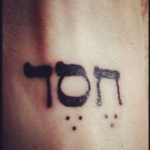 I love my husband. We have been married for almost 27 years. He doesn’t want me to get a tattoo. I want one. Just a little one. Nothing huge. I don’t personally think there’s anything wrong with tattoos. But he doesn’t want me to get one. So am I going to go out and get one when he happens to be out of town? No. Why? Because I love him and I am going to respect this desire of his that I not get one. I do what he asks because I love him and I know that he loves me. He’s not asking me not to get one just to keep me under his thumb. I know he would love me even if I did get one, but it would be disappointing to him that I made this choice. And I would feel the break in our relationship.
Do I give rules to my kids and then reject them if they don’t follow them?
Will my husband stop loving me if I get a tattoo?
No. And we’re broken human beings who make mistakes.
We can be assured that God will not abandon us if we break His rules, put into place for our protection. But our disobedience is not without consequences. God’s love for us is not measured by how well we follow His rules, but our obedience can be a thermometer of how much we truly love God.
The gospel opposes earning but is not opposed to effort.
Images from agingwithpizzazz.com; whatisoppositionaldefiantdisorder.com; pinterest.com
 Father’s Day is just around the corner. How very appropriate and heartbreaking that the immigrant crisis—children being torn from the very breasts of their mothers—now center stage in our country should be garnering so much notice at this time.
 there are better ways to handle the situation. I’m not a fan of illegal immigration, but I am a fan of people. You can’t treat them like animals. They are not cattle or sheep to be separated for slaughter.
 In this her first book, Shelly Wildman encourages parents to engage in intentional discipleship, positioning your kids to follow Jesus as they grow in independence. By asking why we do the things we do, we’re taking a closer look at our efforts as a family.
 and here’s what you’ll get in the end.’ But I don’t believe we can parent by formula. I think we have to look at our unique family and ask why.
 Shelly Wildman is a former writing instructor and author of the forthcoming book First Ask Why: Raising Kids to Love God Through Intentional Discipleship (Kregel). Shelly holds degrees from Wheaton College (BA) and University of Illinois at Chicago (MA), but her most important life’s work has been raising her three adult daughters. She and her husband, Brian, have been married for 32 years and live in Wheaton, IL. Shelly speaks to women’s groups in the Chicago area and spends much of her free time mentoring young women. When she has time, she loves to cook, read, and travel.
 The truth is, though, that we are called to give people respect whether they deserve it or not. Not matter who they are, no matter what they have or haven’t done, no matter if they agree with us or not.
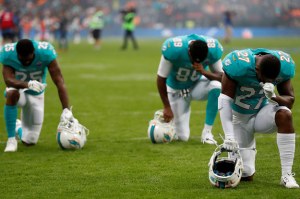 frustration that is felt by some of these men.
 In the same way, not everyone would find certain actions disrespectful. Some would feel any variance from the strict code regarding the flag would be disrespectful. You don’t wear the flag as clothing. You don’t let it touch the ground, and so on. But they would understand that some people have been disrespected by the authorities in their country, and though they love their country, they want things to change.
 So I spent nearly 3 months writing every day. I loved the process as it really stretched me to talk about words as diverse as “abide” and “zombies,” from “chihuahuas” to “cats.” It was amazing to me how often the word for the day aligned with the calendar. As my 3 months of daily posts came to an end at the beginning of January, it was very appropriate that the word would be “waiting.”
 salvation; my God will hear me.”
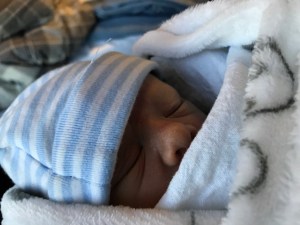 When I was anxious after a late-term ultrasound showed a dilation in our grandson’s bowels, I was not focusing on who the Lord is. I wanted the baby to come quickly so that we could find out what this dilation was. But that wasn’t trusting, that was fearing.
