Archives

Tandem Living: Weathering the Storms

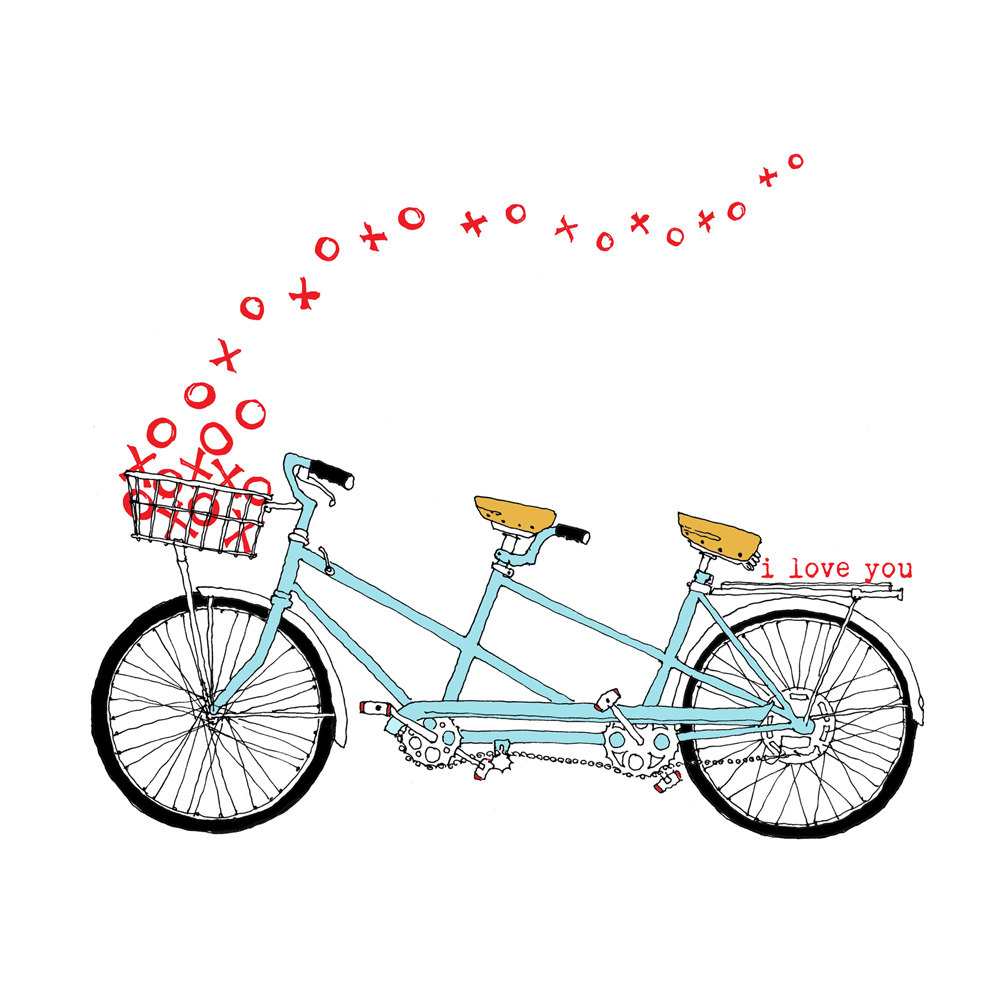
tandem bike drawingSo far in my miniseries on tandem living, I’ve talked about the importance of going in the same direction, how communication is key, that trust is essential and that people are watching us. Today I want to talk about what happens when you get caught in the rain.

A couple of years ago, on our biennial trip to Colorado, David and I were riding our rented tandem from a meeting back to the apartment where we were staying. We knew the potential for a storm was there; we were hoping we could outrun it. No such luck. We got drenched. And, unlike Florida rainstorms, this one came with some chill to it. So wet, cold and still miles from home, we could have gotten really grumpy with each other. But what good would that have done? It’s not like either one of us planned to get caught in the rain. It was simply the circumstance. We were here, and we needed to get there, and the only transportation we had was our bike. We either weathered the storm together, or we found a place to hide out and never got to where we were going until it was too late for whatever it was we were supposed to do next.

It would have been good if we had known it might rain and had been better prepared. This past summer, we knew there was a stormy day in which we would have to ride, so we had two weatherproof jackets with us. Though the rain this time wasn’t as hard, we still would have been much more wet if we hadn’t had those jackets. Preparation for the storm helped.

Before we were married, David and I attended a FamilyLife marriage conference. One of the things I most remember from that conference is one of the speakers telling us, “Your spouse is not your enemy.” If we determine to see ourselves as members of the same team, we’ll be able to face whatever confronts us much stronger. In the book of Ecclesiastes in the Bible, King Solomon, the writer, says, “Though one may be overpowered, two can defend themselves. A cord of three strands is not quickly broken” (Ecc. 4:12). The third cord is God.

For four years, from 1992 to 1996, David and I battled infertility. Month after month we hoped to be pregnant, and month after month we were disappointed. When we finally did get pregnant, under the care of an infertility doctor, I miscarried. That was certainly a storm we needed to weather together. And it made us stronger.

Strong enough to endure two more miscarriages over the next several years. Strong enough to face David’s chronic ulcerative colitis. Strong enough to weather the storm of my parents’ deaths 16 months apart. Strong enough to handle the divorce of David’s parents after 48 years of marriage.

Storms, whether actual or metaphorical, are a part of life. Without the rain, things don’t grow. Without trials, our character cannot be molded. How we face those storms in tandem living–with perseverance and partnership or anger and an adversarial outlook–determines our ultimate character. Knowing those storms will come, and having whatever tools we need to help us better face them, makes a big difference.

Tandem Living: People Are Watching Us

tandem bike drawingIt never fails: As we’re riding our tandem bike around town, people stare, smile and often comment. Kids especially. They’ve never seen such a thing. One boy exclaimed, “Cool! It’s like two bikes stuck together!” Even construction workers smile at us. There’s something about the retro feeling a tandem bike brings, but I think there’s also the aspect of togetherness that people think is cool. That’s the term we most often hear: Cool.

If, while we were riding along, we suddenly fell into a ditch, or started bickering about which way to go, or stopped altogether and decided not to go on, people would notice. I think what we were doing wouldn’t be seen as quite so cool anymore. Maybe people would decide that riding solo is much better.

We don’t ride our tandem bike to show off to other people. In fact, that has never once entered my mind. “Hey, let’s go take a ride on our tandem so that we can have people think we’re cool and they’ll smile at us and we’ll make them happy.” That would be ridiculous. We ride because we like to do things together, and because it’s fun, and because it’s good exercise.

We didn’t get married so that we could fit into any certain crowd, or get a bunch of gifts, or save on our living expenses. We got married because we love each other and want to spend the rest of our lives with each other, supporting each other, serving each other. We figured we could be better together than we were apart. But the fact is that people see us. If they know we’re followers of Jesus, they’re looking to see if that makes a difference. According to the statistics, it doesn’t make enough of a difference to most. We pray our marriage is different. We’re committed and we have a lot of help, but ultimately, we can’t make it without the grace and hand of God.

We like it when people comment to us when they see us riding our bike. We like to encourage people to give it a try themselves. We’re happy to help people learn how.

Same goes for marriage. We’d be very happy to mentor engaged or newly married couples. We haven’t really gotten a chance to yet, but we figure we might have some things to share after 22 years. Until that time comes, though, we can certainly do all we can to work on our own relationship and make sure we’re keeping away from the ditches. We know others are watching.

Next: Sometimes you have to weather the storms

Tandem Living: Have a Little Faith!

tandem bike drawingSo far in my tandem cycling and marriage series, we’ve seen how tandem cycling–and marriage–require that you go in the same direction and that you communicate. Today, I want to talk about a 3rd requirement: trust. I trust that my tandem partner is not going to lead me somewhere dangerous. I trust that he is going to tell me when there’s a hazard in the way. I trust that he’s going to get us where we want to go. And I trust that he knows what he’s doing, not only because he’s been riding for a long time, but because he has leaned upon the wisdom of others.

David is a big Googler. By that I mean that he likes to look things up using the Google search engine. He recently bought a motorcycle and has spent a lot of time on websites and forums seeing what other people are saying about his particular model. He also borrowed a DVD about riding safety from a neighbor who rides.

He has had occasion to Google things about cycling also. When he wants to buy a new bike, he will search online and weigh the merits of different brands. Because of his thoroughness, I trust that he knows what he’s talking about. If I question every decision he makes, our rides would be very unpleasant.

Trust and communication go hand in hand. I need to be kept in the loop. If he chooses to go a different way than we usually go to get somewhere we’ve been before, just the words, “I thought we could try a different route today,” go a long way to diffuse any concern I might have. Getting me involved in the decision works even better. The more we communicate, the greater the trust level is going to be.

The same holds true for marriage. If David doesn’t answer his phone, I need to trust it’s because he’s busy, not because he’s doing something he’s not supposed to be doing and doesn’t want me to know about it. If I go shopping, he needs to trust that I’m not spending money haphazardly and wastefully. He trusts me to be in charge of our budget. I trust him to lead our family in an upright and godly manner. He needs to know that I trust him to care about our well being. In order for him to know that, I need to tell him. In order for me to know that he trusts me, he needs to tell me.

I trust that David doesn’t wake up in the morning and think, “How can I annoy/bother/disrespect/hurt/whatever my wife/kids today?” When we jump on our tandem bike together, I trust that he’s not thinking, “What hazardous/arduous/sticky situation can I ride us into this time?”

Think the best, trust the other person, have a little faith. It goes a really long way in tandem cycling–and in marriage.

Next time: How people react when they see us riding our tandem–and enjoying a happy marriage

Tandem Living: Communication is Key

tandem bike drawingLast time, I talked about how important it is in tandem biking–and marriage–to make sure you’re going in the same direction. This time, my observation is that communication is a must in order to ride smoothly. My husband is an internal processor. He thinks about things and then makes a decision. Problem is, because he’s been talking to himself about things, he thinks he’s been talking to me about them. We often have conversations like this:

Me: Where are you going?

David: Home Depot

Me: What are you going to get?

David: Supplies for the fence project.

Me: What fence project?

David: You know, the fence project. I told you about it.

Me: Umm, no, you didn’t.

David: Yes, I did. You just don’t remember.

I may forget things, but usually it’s not about conversations we have about projects around the house. Every once in awhile, I have to ask him, “Thinking of anything I need to know about?” just so these things don’t come out of the blue.

In tandem biking, it is important for the “captain,” the one in the front doing the steering, to tell the “stoker” what is coming up. If there’s a low branch in the way, if there’s a big bump, if the stoker needs to signal a turn, the captain needs to communicate these things in order to make the ride more pleasant for both parties.

Likewise, if the stoker wants to go a certain way, and there’s not a specific destination in mind, then the stoker needs to communicate that. And the captain needs to listen. Recently, on our trip to Colorado, we rented a tandem bike. We let the owner drive off before making sure the bike was completely rideable, and therefore we ended up with a stoker’s seat that kept tilting as we rode. Every few minutes I would need to tell David to stop so that I could readjust the seat to a position that wouldn’t make me feel like I was about to fall off. I could have just kept that information to myself hoping he would notice how uncomfortable I was, but that would have just made me fume and him continue in cluelessness. My discomfort wasn’t his fault, but he certainly needed to know it was there so that he could help alleviate the problem. As soon as we got to our destination, we called the shop and the problem was fixed. Why go a week with a tilty seat when a little communication can solve the problem?

Communication in marriage is not an option. Small problems can become huge irritations if we don’t let our spouse know that something is bothering us. If husbands and wives don’t let some of the internal processing they’re doing become external, then misunderstandings will ensue.

Tandem biking is a partnership, and tandem living works the same way. Don’t let me get blindsided. Tell me about the big branch in the middle of the road as well as the cute little rabbit you know I’d like to see.

Next time: In tandem biking–and marriage–trust is essential.

Tandem Living: Going in the Same Direction

tandem bike drawingIn 1994, my husband, David, and I made a trip to South Africa. He was going to show the JESUS film in villages along the Zambezi River, and I was going to interview some people and write up some reports on how the film was being used in the area. While we were there, staying with friends in Pretoria, we went shopping and came upon a tandem bicycle made by Peugeot. Doing the math, we decided we couldn’t pass up such a great deal on a tandem since we had enjoyed the riding experience on a friend’s bike before. So we bought it.

That was 19 years ago, and the bike is still going strong. It’s a behemoth, not like the light-weight models you can find today, but it has served us well. At one point, when our boys were little, we had one kid’s seat on the front and one kid’s seat on the back. We were the mini van of bicycles.

David grew up riding his bike alone. He was used to just getting up and going wherever he wanted, pretty much whenever he wanted. I grew up riding my bike also, but I rarely did it alone. What’s the fun in that? When we got married, we both willingly gave up our solo lifestyles to blend into a tandem life together.

Over the years, we’ve both learned a lot about what it takes to ride in tandem with someone, both on a bicycle and in married life. In the next several weeks, I’m going to focus my posts on how tandem bicycling mirrors marriage. You might be surprised by what I come up with.

My first observation is that, in order to ride a tandem bike, you must be going in the same direction. Now, that might seem obvious to you, but in marriage, some might think it’s OK to have two different paths. Before we started dating, David and I were both on the staff of Cru, a group of compassionate Christians desiring to connect people with God all over the world. He is an engineer, I am a writer. He’s good at math. I’m not. He’s an introvert, I’m an extrovert. We have a lot of differences. But we both were following Jesus wherever He would lead us, therefore, our paths easily converged. If I had wanted to make my way in the secular publishing world, and David was called to be a missionary with Cru, our direction would not have been the same. Even more striking, if I had been a follower of Jesus, and David had not, our paths would have been very different. Going in the same direction is vital.

There are still many times when we ride our single bikes, but our commitment is to tandem living. We can’t ride our tandem bike and go in different directions. If we’re not both pursuing Jesus, our marriage will falter. If we’re both not staying on the same road, we will crash. Head in the same direction, follow the same road, have the same objective. The riding is a lot smoother that way.

Next: Tandem Living–Communication is Key

tandem bike drawing from http://www.etsy.com